Phone: 0086-15860783774 Email: contact@displaystone.com

On this page
- Why Travertine Samples Deserve a Dedicated Display
- Choose the Right Rack for Your Travertine Sample Display
- Lighting Warm Stone the Right Way
- Display Travertine by Finish: Honed, Polished, Brushed, Tumbled
- Travertine Color Varieties to Group On Display
- Backdrop and Color Pairing That Makes Travertine Pop
- Organize, Label, and Care for Your Warm-Stone Collection
- Real Travertine vs Porcelain-Look Samples
- Common Mistakes When Displaying Travertine Samples
- Where to Place Travertine Samples in the Showroom
- Frequently Asked Questions
Why Travertine Samples Deserve a Dedicated Display
However, travertine reads differently from the grey and white stones most showrooms grew up displaying. Its appeal is warmth: creamy beige, sand, honeyed caramel, and golden veining that flatters under soft light. Those same qualities get erased by the habits built around granite and marble. A stark white backdrop washes the warmth out of a travertine sample display. A 5000K fluorescent tube turns honeyed travertine grey.
A flat, upright board hides the honed or leathered texture that is half the reason clients choose travertine in the first place.
For example, when you give travertine its own display logic, two things happen. First, the stone looks like the material your client fell in love with online. Second, your showroom stops feeling like a generic stone yard and starts feeling like a curated warm-stone destination. That shift is exactly what a well-built travertine sample display is designed to capture.
It is the reward the 2026 move away from grey interiors is handing showrooms that merchandise warm stone on purpose.
Choose the Right Rack for Your Travertine Sample Display
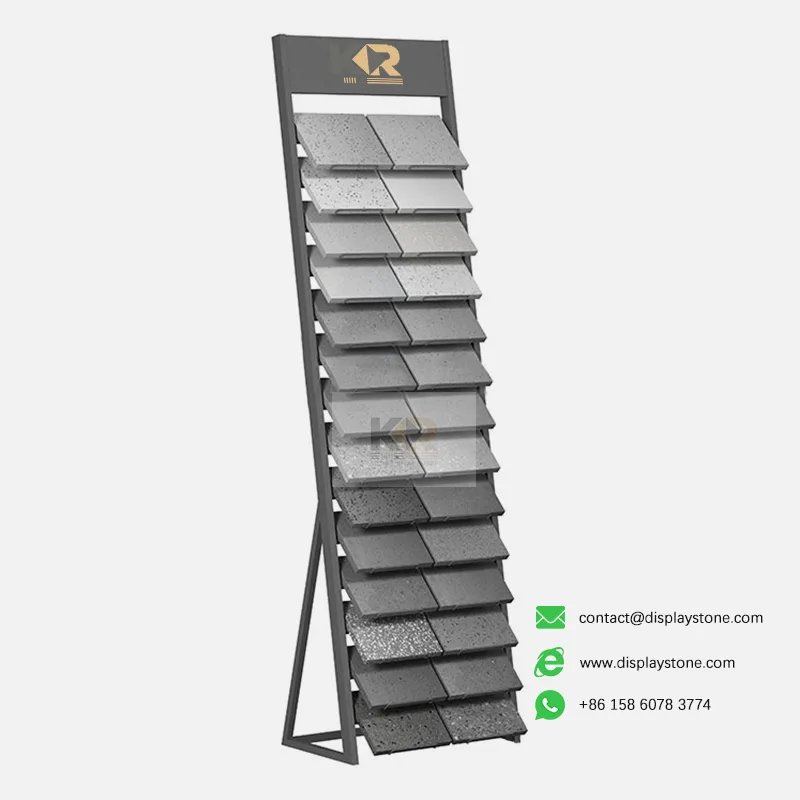
Also, the rack is the frame around the picture. For warm stone, you want a frame that tilts the sample toward the viewer and toward your light source. Avoid one that leaves boards flat and shadowed. Here are the formats that work best for a travertine sample display, with notes on when each fits.
Slanted and A-Frame Racks
In addition, a tilted face catches warm directional light. It shows the stone at the angle a client will actually view it. That angle makes any travertine sample display read as rich rather than flat. Slanted racks suit 12″ × 12″ boards. They let a client flip through a warm-stone collection like a swatch book. For most showrooms this is the default choice.
Our slanted stone display rack is built for exactly this — a stable lean that keeps heavy stone boards from tipping.
Vertical Sample Racks
Next, if you carry a large warm-stone range, use a vertical stone display rack. It holds dozens of boards in a small floor footprint for a travertine sample display. The trade-off is that boards sit closer together, so lighting and spacing matter more to keep each travertine finish readable.
Tabletop Sample Stands
So, for consultation desks, a tabletop stone display rack keeps a small set of travertine boards within arm’s reach during a meeting. Clients touch the honed surface while they talk, which is where most warm-stone sales are won.
Rotating Display Towers
Because of this, a rotating tower suits compact floors that still need high visibility. A stone display tower lets a client spin through your travertine range without walking the whole room, useful in tight studios and trade-show booths.
Folding Sample Books
Finally, for take-to-site selling, a folding stone sample book carries a curated travertine set to client kitchens and contractors. It keeps the warm-stone story consistent from showroom to job site.
Lighting Warm Stone the Right Way
Thus, Lighting is the single biggest factor in whether a travertine sample display looks rich or flat. Warm stone flatters under warm white light around 3000–3500K, not the 5000K “daylight” tubes common in workshops. Cool light strips the honey out of caramel veining and makes travertine read grey and clinical.
Aim for a high color-rendering index too — CRI 90 or above — so the stone’s true tone shows instead of a flattened version. This is the same lighting logic a good stone sample display rack section needs for every warm material.
Still, Angle matters as much as color. A light aimed straight down flattens a honed or leathered travertine face. A light grazing the surface at 30–45 degrees reveals the texture, pitting, and depth that make the material feel natural. For care and sealing standards behind the stone, the Natural Stone Institute is the authority most fabricators reference.
Display Travertine by Finish: Honed, Polished, Brushed, Tumbled
Yet, Travertine is rarely sold in a single finish, yet most showrooms only show one. Display the finish family together so buyers feel the difference instead of guessing at it. A travertine sample display that groups by finish answers the exact question clients ask: “which surface suits my project?”
- Honed — matte, low-sheen, the everyday travertine look. Shows warmth best under warm light and is the workhorse finish for floors and walls.
- Polished — reflective with deeper color, but it can read like marble and hide travertine’s texture. Show it, but never as the only option.
- Brushed — textured and slip-resistant, ideal for outdoor and wet areas. The relief reads best at a 30-degree tilt under grazing light.
- Tumbled — soft, worn edges with a rustic feel. Pairs with wood and matte black for a farmhouse or Mediterranean story.
Therefore, keep a labeled swatch of each finish cut from the same travertine block. Side by side, a client sees the stone itself, not just a surface treatment. That comparison is what turns a “maybe” into a signed order.
Travertine Color Varieties to Group On Display
However, Travertine’s warmth comes in distinct varieties. Naming them on the label makes your range read as curated rather than as a wall of beige. Build your travertine sample display around these four groups:
- Classic / Roman (cream to beige) — the safe, best-selling neutral that anchors most warm-stone sections.
- Walnut / Noce (brown, honeyed) — deeper and richer, the “caramel vein” travertine that photographs beautifully in vignettes.
- Silver (grey-beige with cool veining) — the bridge between warm travertine and the grey interiors many clients still own.
- Gold / Yellow (golden, dramatic veining) — the hero stone for luxury displays and feature walls.
For example, a travertine sample display that groups by variety — not a flat beige stack — lets a client move quickly. They go from safe Classic to statement Gold in a single glance. That journey from neutral to hero is exactly where upsells happen.
Backdrop and Color Pairing That Makes Travertine Pop
Also, the backdrop behind a sample changes how warm the stone looks. Three pairings work reliably for a travertine sample display:
- Warm neutrals — oatmeal, sand, and soft greige panels echo the stone’s own palette and make honeyed veins feel intentional.
- Wood grain — a wooden or wood-finish stand picks up travertine’s earthy origin and adds the “natural material” story clients respond to.
- Matte black or brass accents — black frames give travertine a gallery contrast, while brass echoes golden veining for a quiet luxury match.
In addition, Avoid stark white and cool-grey backdrops near your travertine. They are fine for Carrara, but they wash the warmth out of travertine and make a premium board look like a leftover.
Organize, Label, and Care for Your Warm-Stone Collection
Next, A travertine sample display should be browsable, not a wall of beige. Group boards by what the client is actually deciding between:
- By tone — cream, sand, honey, caramel in separate zones so clients see the warm range at a glance.
- By finish — honed, leathered, and polished side by side, because many buyers do not realize travertine comes in more than one finish until they see it.
- By origin and application — Italy, Turkey, or local quarry, plus where it works (floor, wall, vanity, outdoor).
So, Label every board with the stone name, origin, finish, and a QR code linking to its page on your site. Rotate a “new arrival” board inside your travertine sample display near the entrance so repeat visitors see fresh material and feel your range is current.
Because of this, Travertine also needs more display care than hard stone. It is limestone — softer (Mohs 3–4) and more porous than granite or quartzite. Fill the surface pits and apply a penetrating sealer before a board goes on display. Sealed boards stay clean and resist the etching that acidic showroom cleaners cause. They show the client the representative, installed-looking stone rather than a dusty, porous chip.
Wipe boards weekly, because travertine’s pale tone shows fingerprints and dust faster than dark granite.
Real Travertine vs Porcelain-Look Samples
Finally, The 2026 travertine boom includes convincing porcelain look-alikes. Many clients cannot tell the sample from the stone next to it. Display both, honestly. Real travertine is porous and needs sealing; porcelain look-alike tile absorbs almost nothing and never needs sealing. Showing the pair lets a buyer weigh authenticity against maintenance before they commit.
It positions your stone sample display rack as the neutral stage for that comparison rather than pushing one material. This honest pairing is exactly what a good travertine sample display is built to support.
Common Mistakes When Displaying Travertine Samples
- Cool 5000K light — the fastest way to make honeyed travertine look grey and cheap.
- Stark white backdrop — washes the warmth out and flattens the stone.
- Showing only polished — most travertine sells honed or leathered; hide that and you hide the product.
- One finish, one color — a single polished cream board misrepresents the warm-stone range your client actually receives.
- Mixed rack styles in one zone — visual chaos that reads as disorganization in a travertine sample display.
- Dusty or chipped boards — travertine’s soft tone shows grime faster than dark granite. A dirty sample reads as “old stock.”
- No labels or QR codes — clients love a board they cannot identify or reorder.
Where to Place Travertine Samples in the Showroom
Thus, Warm stone sets a welcoming tone, so it earns prime real estate. Place your travertine sample display near the entrance or in a dedicated natural stone showroom zone. Put it beside wood and brass displays so the warm palette feels like a story rather than an isolated board.
If you have a window, angle the display to catch daylight during peak hours — sun through travertine is the one light no fixture fully copies.
Still, Build a small warm-stone vignette: a travertine board, a wood stand, a brass pull. The client then pictures the material in a finished room, not on a shelf. Vignettes that show the installed project consistently close at a higher value than loose boards alone.
Frequently Asked Questions
What Kelvin light is best for travertine samples?
Yet, Warm white around 3000–3500K with a CRI of 90 or higher. This reveals honeyed tones and makes a travertine sample display look its best without the grey cast that 5000K daylight tubes produce.
Should travertine samples be honed or polished on display?
Therefore, Show more than one finish. Most travertine sold today is honed or leathered, so displaying only polished boards in a travertine sample display misrepresents the material your client will actually receive.
Should travertine samples be sealed before display?
However, Yes. Fill the surface pits and apply a penetrating sealer before a board goes on the display. Sealed travertine stays clean, resists etching from acidic cleaners, and shows the client the representative, installed-looking stone rather than a dusty, porous chip.
What is the difference between honed and leathered travertine?
For example, Honed travertine is ground flat with a matte, low-sheen surface. Leathered travertine is brushed to keep a textured, low-sheen face that highlights the stone’s natural pitting and movement — a favorite for warm-stone feature walls.
How many travertine samples should a showroom display?
Also, A curated 15–30 warm-stone boards across cream, sand, and caramel tones outperforms a wall of fifty on a warm-stone display. Clients compare faster and decide with more confidence when the range is edited. A 12″ × 24″ board is the workhorse format for showing real veining.
What size should travertine sample boards be?
In addition, Most showrooms use 12″ × 24″ boards so clients see veins continue across the slab. Large-format 3 ft × 5 ft panels work for full-vein hero displays. Keep board size consistent within one travertine sample display zone so the wall reads as intentional.
Next, Building or upgrading a warm-stone section? Our stone sample display rack range is built for travertine sample display setups, with custom colors, branding, and modular formats to fit any showroom. See the slanted rack to start, or pair it with our folding stone sample book for take-to-site selling.